Rope Flying Hero Prime
AN NGUYEN AUTOAction
4.115.00 Reviews
- Version
- 1.0.7
- Installs
- 1.00M
- Age Rating
- Everyone
Screenshots
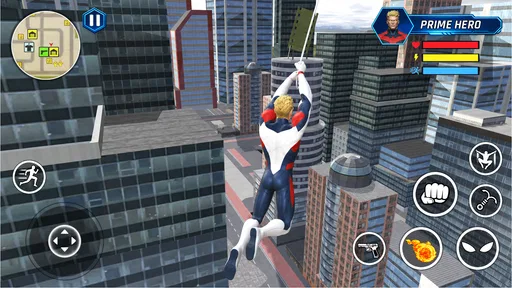
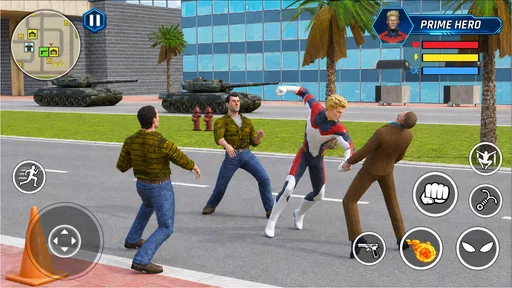
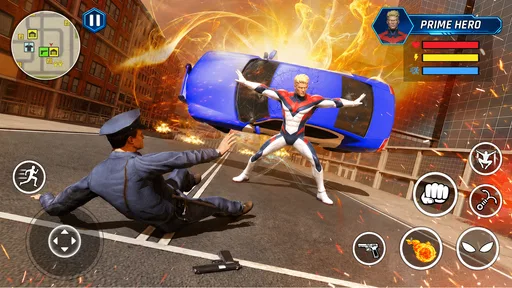
Our Review of Rope Flying Hero Prime
 Analysis by Appyee
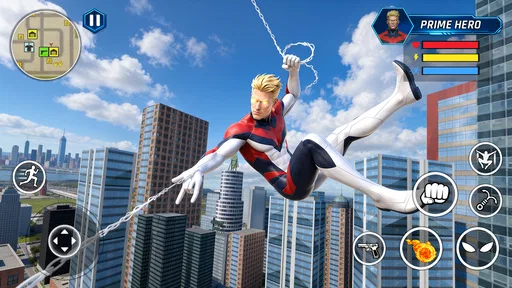
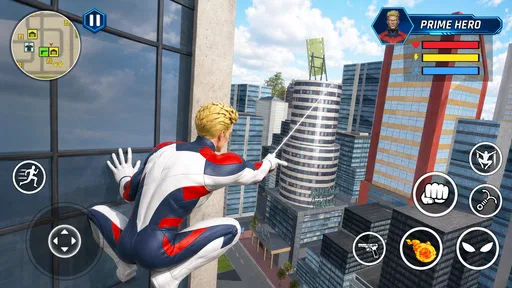
I approached Rope Flying Hero Prime as a quick-action city game rather than a deep superhero simulation. Its central appeal is easy to understand: move through an urban setting with a rope, react to trouble, and keep the character moving. That simple idea makes it approachable within seconds, but it also places a lot of pressure on the controls. When movement feels responsive, swinging through the city is satisfying; when timing goes wrong, the same simplicity can make mistakes feel abrupt.
Developed by AN NGUYEN AUTO, this free action game is aimed at a broad audience and carries an Everyone age rating. It has reached over a million installs and holds a 4.1 average from around 1.2 thousand ratings, which suggests that the basic concept connects with many players while leaving room for individual opinions about polish and control comfort. I found it most appealing in short sessions, especially when I wanted something more active than a conventional endless runner but less demanding than a large, story-heavy action game.
How the game reads and guides you through the city
The first strength is immediacy. The premise does not require a long explanation before it becomes understandable: the hero travels by rope, confronts crime, and explores the city. That clarity matters for players who prefer to learn by doing. Instead of asking me to memorize a complicated fictional world, the game gives me a recognizable role and a visible objective: stay mobile and act like a powerful flying hero.
That straightforward structure can also help players who find dense menus or large amounts of text tiring. The experience is built around visible action, so the most important information is connected to what is happening on screen. I could focus on the character, nearby buildings, and the next movement rather than constantly interpreting long instructions. For a young player or someone returning to games after a break, that lower reading burden is a genuine advantage.
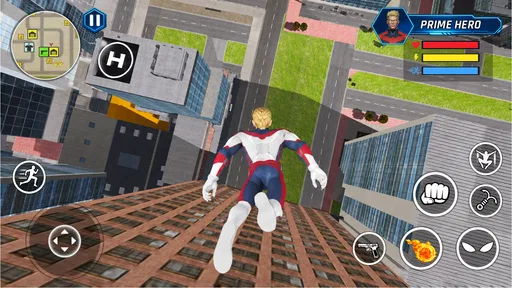
Still, readable design is not the same as effortless design. A rope-flying game naturally creates a busy picture: the hero, buildings, streets, enemies, and movement paths can compete for attention. During a fast sequence, it may take a moment to understand whether I am approaching a target, missing a swing, or simply changing direction. Players who rely on strong visual separation may find the action easier when they slow down and observe the environment before committing to a move.
My practical advice is to treat the opening sessions as a control-reading exercise. Rather than rushing immediately toward every confrontation, I would first test how the hero gains height, changes direction, and releases or redirects the rope. That small pause makes later action more predictable. It also reveals whether the game’s visual pace suits you before you invest much time in it.
The current release is version 1.0.7, and I would judge it as a compact experience rather than a replacement for a large open-world superhero title. The difference is important. A bigger alternative may offer more missions, character development, and carefully explained systems, while this game’s attraction is the direct sensation of moving through a city and responding to danger. If you want a quick route into superhero action, that is a benefit. If you expect a detailed campaign, it may feel limited.
Controls that reward anticipation more than frantic tapping
The most useful adjustment I made was to stop treating every moment as an emergency. Rope movement works better when I anticipated the next anchor point and allowed the hero’s momentum to do some of the work. That approach reduced unnecessary corrections and made the city feel less like an obstacle course. It is a small but meaningful distinction: the game is more enjoyable when I plan a swing instead of reacting to every frame.
This also creates an interesting trade-off for different players. Someone comfortable with timing and spatial judgment may enjoy the feeling of building a clean route. Someone with reduced precision, slower reactions, or difficulty tracking moving objects may prefer a calmer game with more forgiving navigation. I would not call this a flaw unique to the title; it is a direct consequence of making rope movement the main attraction. However, it is the first question I would ask before recommending it to a friend.
Because the game is free, it is easy to try without making a financial commitment. That makes it suitable for a short test on a personal device or for sharing with a younger family member under supervision. The Everyone rating broadens its audience, but age suitability does not automatically mean that every control style will suit every player. A child may understand the superhero idea immediately while still needing time to develop the timing required for smooth movement.
Movement, sensory load, and different ways of playing
From a motor perspective, the key challenge is repeated coordination. The player needs to combine direction, timing, and attention to the environment. Even if the basic input is easy to understand, successful movement may require quick adjustments when the hero approaches a building or an enemy. That makes the game engaging for players who enjoy active control, but it can become tiring for anyone who experiences hand fatigue or finds rapid gestures uncomfortable.
I would approach it in short bursts rather than assuming that a long session is the best way to play. A few focused attempts can be more rewarding than repeatedly forcing a difficult sequence after concentration has dropped. Taking the game in this way also helps separate a genuine control problem from simple fatigue. If movement feels manageable at first but becomes frustrating after extended play, the issue may be session length rather than the entire design.
There is a useful sensory consideration as well. Urban action scenes tend to place motion, changing positions, and visual targets together. Players who are sensitive to rapid movement or screen clutter may want to keep sessions brief and choose a stable viewing position. I found that looking at the intended destination before making a swing was easier than following the hero continuously. That technique reduces the feeling of chasing a moving object with the eyes.
Players who depend on audio cues should be cautious about making sound their only source of information. The core activity is visibly represented through the hero’s position and the surrounding city, so I would keep visual attention on the route and targets. Conversely, players who find sound distracting can concentrate on the action itself and treat any audio as secondary. I would not recommend the game to someone who needs extensive alternative input or highly configurable accessibility controls, because the appeal depends heavily on direct, timely interaction.
The game’s visual fantasy may nevertheless be welcoming in another sense. The role is instantly legible, and the player does not need specialist knowledge to understand what success should look like. That can help people who are new to action games. I would introduce it by demonstrating one movement at a time: attach, travel, adjust, and then engage with the next threat. Explaining the sequence verbally before handing over the device can make the first attempt less overwhelming.
Making a short session work in everyday situations
A realistic use case is a ten-minute break when I want something active but do not want to begin a long campaign. I can open the game, spend a few attempts practicing movement, and stop without needing to remember a complicated plot. That makes it a better fit for fragmented free time than a narrative adventure that depends on extended attention.
It can also work well as a casual shared activity. One person can handle movement while another suggests where to go next, which turns the city into a simple planning exercise. This is particularly useful for a younger player who understands the objective but is still developing coordination. The helper should guide rather than take over, because discovering the rhythm of the rope is part of the game’s satisfaction.
On a crowded commute or in a noisy waiting room, I would be more selective. Rapid action and limited attention do not always mix well, especially when interruptions can make a carefully timed movement fail. In that situation, a slower puzzle or turn-based game may be more comfortable. Rope Flying Hero Prime is at its best when I can give the screen a few uninterrupted minutes and keep my hands in a stable position.
For players who use a larger display, the main benefit would be easier viewing of the city and the hero’s route, though I would not assume that a bigger screen automatically solves control challenges. The important factor is whether the player can see the next destination without losing track of the character. A device held too far away may make targets harder to judge, while a cramped view may make the action feel crowded. Finding a comfortable viewing distance is more valuable than simply choosing the largest available screen.
Network expectations are another practical consideration. I would not plan a session around a guaranteed connection unless the game’s current behavior on your device has already been tested. For someone choosing games specifically for offline travel, that uncertainty is a reason to try it before leaving home rather than assuming it will behave like a fully offline title. A conventional offline action game may be the safer choice for flights, rural trips, or places with unreliable service.
Where the experience still creates barriers
The main barrier is not the superhero theme; it is the relationship between speed and precision. A player may understand the goal perfectly and still struggle because the required correction arrives quickly. That distinction matters when recommending the game to someone with limited dexterity. The challenge can feel exciting for one person and inaccessible for another, even though both understand the same instructions.
Another limitation is the likely narrowness of the central loop. Swinging, fighting crime, and exploring provide a clear identity, but players seeking deep progression, extensive customization, or a rich story should compare it with larger action adventures before settling in. I enjoyed the focused premise, yet I would not present it as a complete substitute for a console-style superhero campaign. Its value lies in immediate play, not in promising every kind of superhero activity.
Visual concentration may also become a barrier during busy moments. If the hero, target, and surroundings blend together, a player may need to reduce speed and make deliberate attempts. That is workable for someone who enjoys practice, but less appealing for anyone who wants consistently calm navigation. The game’s strongest feature and its biggest demand are the same thing: movement through a three-dimensional city.
I would also avoid recommending it as the first choice for players who need extensive personalization of controls, strong non-visual alternatives, or a very gentle pace. A more accessibility-focused game with clearly documented input options would be a better match in those cases. This is not a judgment on the player’s ability; it is a recognition that the design’s fun depends on timing and visual tracking.
For everyone else, the best way to reduce friction is to establish a repeatable routine. Begin by identifying a safe route, use fewer large corrections, and pause between attempts instead of immediately repeating a failed movement. If a younger or less experienced player is involved, let them practice travel before adding combat pressure. That separates the motor skill from the sensory demands of a full action sequence and makes improvement easier to notice.
An inclusive verdict for the right kind of player
I came away seeing Rope Flying Hero Prime as a free, accessible-to-start action game with a specific control personality. Its Everyone rating and clear superhero premise make it easy to offer to a broad audience, while its rope-based movement gives it more character than a standard tap-through action title. The game is most successful when I have a few quiet minutes, a comfortable view of the screen, and enough patience to learn momentum rather than fight it.
The game’s popularity is understandable: over a million installs show that the idea has reached a substantial audience, and the 4.1 average indicates a generally positive reception. I would still treat those figures as a starting point, not a guarantee. The experience depends strongly on whether quick visual tracking and repeated directional adjustments feel comfortable to you. A player who enjoys experimenting with movement may find a satisfying little playground, while someone looking for relaxed controls may be disappointed.
My recommendation is therefore conditional but positive. Try it if you want short superhero sessions, enjoy learning movement through practice, and prefer direct action over lengthy menus or story setup. Give it to a younger player as a guided activity if they need help separating movement from combat. Choose a different action game if you require extensive control customization, slower pacing, or a fully developed campaign with broader progression.
The fairest way to judge it is by the comfort of your hands and eyes, not by the superhero label alone. In my experience, the game earns its place as a lightweight city-action option because it gets to the fun quickly. It is not universally comfortable, and it does not need to be. For players whose abilities and playing context match its fast, visually led design, the simple act of swinging toward the next point can be enough to make a short break feel genuinely entertaining.
Verdict
Strengths of Rope Flying Hero Prime
- Simple controls make swinging and flying easy to learn.
- Fast-paced missions provide short bursts of entertaining gameplay.
- Bright 3D visuals give the city a lively superhero atmosphere.
- Unlockable upgrades add motivation to keep completing missions.
- Offline play is convenient when you have no internet connection.
Limitations of Rope Flying Hero Prime
- Mission objectives can become repetitive after extended play.
- Touch controls may feel imprecise during fast aerial movements.
- Frequent ads can interrupt gameplay between missions.
- Progression may feel slow without optional purchases.
- The city environment offers limited exploration beyond set objectives.
Similar Picks in This Category
View All
Temple Run 2: Endless Escape
Imangi Studios4.1

PUBG MOBILE
Level Infinite4.3

Free Fire: 9th Anniversary
GARENA INTERNATIONAL I4.4

Talking Tom: Hero Dash Run
Outfit7 Limited4.3

slither.io
Lowtech Studios3.9

Sniper 3D:Gun Shooting Games
Wildlife Studios4.6
Frequently Asked Questions
What is Rope Flying Hero Prime?
Rope Flying Hero Prime is an action-adventure game in which you control a superhero-style character who moves through a city using ropes, swinging mechanics, jumps, and aerial movement. The game focuses on exploring urban environments, completing missions, fighting enemies, and enjoying free-roaming superhero gameplay. Its appeal comes from combining rope-swinging traversal with combat and casual open-world activities.
How do you play Rope Flying Hero Prime?
Gameplay is based on navigating the city, accepting or completing missions, and using the character’s rope ability to move between buildings and reach different locations. Players normally combine walking, jumping, swinging, attacking, and other available abilities to overcome obstacles and opponents. The controls may take a little practice, especially when changing direction in midair, but the basic mechanics are designed to be accessible for casual players.
Can Rope Flying Hero Prime be played offline?
Rope Flying Hero Prime may support offline play for its main single-player activities, allowing you to access the core gameplay without a continuous internet connection. However, connection requirements can vary by version, device, advertising features, updates, or optional services. It is best to launch the game once while connected, then test airplane mode on your device to confirm which missions and features remain available offline.
Is Rope Flying Hero Prime free to download?
Rope Flying Hero Prime is generally offered as a free download, although availability and pricing can depend on the Android or iOS store, region, and the current publisher release. Free games may include advertisements, optional purchases, or other monetization elements. Before installing, check the store listing for in-app purchase information, required permissions, supported devices, and the latest update details.
What devices are compatible with Rope Flying Hero Prime?
Compatibility depends on the specific version of Rope Flying Hero Prime and the operating system installed on your phone or tablet. Devices with a recent Android or iOS version and sufficient free storage should provide the best experience, while older hardware may encounter slower loading, reduced graphics quality, or frame-rate drops. Always review the official store requirements before downloading to verify compatibility.
Play our best games!


